
Monday, September 10, 2018

Thursday, June 28, 2018
Sunday, October 8, 2017
The Mad Monarchist: The Empire of Lies
The Mad Monarchist: The Empire of Lies: One of America's most important "Founding Fathers" once referred to his vision of the United States of America as an "E...
Saturday, October 7, 2017
Sunday, March 19, 2017
ELVIS by Albert Goldman

Elvis fans HATE this book. Albert Goldman's muck raking biography published in 1981 still rankles Elvis lovers. Goldman went on to write a similarly received biography of John Lennon in 1988. Goldman died of a heart attack on an airplane in 1994.
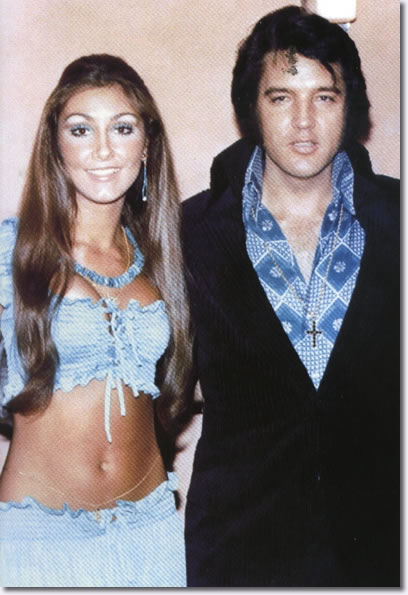
Elvis and girlfriend Linda Thompson
who Goldman says had to dodge bullets coming through the bathroom wall.

Albert Goldman and his muck raking book

Young Elvis being mobbed by the girls.

Reading Goldman's Elvis was a perverse pleasure. Hard core Elvis fans will still be offended, but I found it to be a lot of fun.
Friday, August 26, 2016
William Tecumseh Sherman: In the Service of My Country

I just finished reading Professor James Lee McDonough's wonderful new biography of General Sherman. This is a traditional "old school" biography which tells the story of the subjects life in a narrative form.
Sherman is a truly fascinating character. His father, a lawyer and early justice of the Ohio Supreme Court, had an admiration for the Seneca Chief Tecumseh who tried to unite the Indian tribes to fight the United States. Sherman's father died when Sherman was nine years old. Being unable to care for her children, Sherman's mother divided up the children and sent them to live with various family members and friends. Sherman was sent to live with the family of U.S. Senator Thomas Ewing. Ewing's wife was staunchly Catholic and raised all of her children as Catholics. Although raised in a devout Catholic home, Sherman always refused to accept the Catholic faith. Sherman eventually married Ellen Ewing whom he had been raised with. Ellen was a very devout Catholic and reared all of the Sherman children in the Catholic faith. Ellen's staunch religious views would be a source of contention between her and "Cump" (Sherman's childhood nickname) for the rest of their lives.

Sherman during the Atlanta Campaign

Sherman in later life.
Resigning his position in Louisiana after that State seceded from the Union, Sherman returned to the army and led a division with some distinction at the battle of First Bull Run. As a commander in Kentucky early in the war, Sherman had what can only be described as a nervous breakdown. Sherman realized that Southerners intended to fight to the bitter end and that it would be a long and bloody war of conquest. Everybody thought Sherman was crazy and he was almost sent home in disgrace. Fortunately, General Grant salvaged Sherman's career and gave him command of an army corps. As Sherman was later to write, "Grant stood by me when I was crazy, and I stood by him when he was drunk. Now we stand by each other always."

Professor McDonough goes into great detail regarding Sherman's generalship. Sherman disdained large battles with huge loss of life and sought to carry on a war of maneuver. McDonough has high praise for Sherman's generalship, although he sees the march through the Carolinas as much more challenging than the vaunted "March to the Sea."
Sherman's relationship with African Americans is also interesting. Sherman was a racist who often employed the "N" word. He believed that blacks were inferior and should not be given full citizenship. After the war, Sherman advocated ending reconstruction and giving control back to former Confederates so long as they were now loyal to the Union. Sherman's career after the war sees him leading the U.S. Army's efforts against the Plains Indians. Although Sherman generally felt that the Indians had been mistreated by the whites, he clearly saw them as inferior to whites and made some statements to the effect that it might be better to just wipe some of the tribes out altogether.

James Lee McDonough, Professor Emeritus of History, Auburn University
Wednesday, February 24, 2016
Julius Caesar: A Biography

Michael Grant (1914 - 2004) was a prolific freelance historian who wrote many books of "popular history" on the history of the Greeks, Romans and other ancient cultures. Over the course of a long weekend vacation, I read Grant's 1969 short biography of Caesar, which has been republished many times in many different editions.

This short book (187 pages) is more of an overview of the life and career of Caesar than an in-depth study. It is, nevertheless, filled with fascinating facts. If you think that our current politics in the United States are a mess, it hasn't gotten as bad as the late Roman Republic yet. At least bribery and assassination have not become the norm. Grant recounts that during several elections there was so much money being borrowed to finance bribes to fix the election, that the interest rates rose. Also, the more things change, the more they stay the same. I read my wife, who is a bankruptcy attorney, a passage from the book detailing how Caesar as dictator basically introduced a primitive form of bankruptcy protection for debtors. Grant also recounts how, because there was a shortage of gold and silver that many estates were being foreclosed on. Because there was a glut of foreclosed real estate on the market, the property sold for much less than was owed on it. My wife asked, "When was this?" I said, "49 B.C." She said"Sounds like the 2007!"

Grant also gives a good overview of Caesar's military campaigns. Caesar waged what we would consider genocide against a number of Gaulish tribes which gained him money and fame. Caesar's famous Commentaries were written to inflate his reputation at home to help him gain and keep political power.

I just thought this picture of Lictors carrying the Fasces was cool!

Michael Grant (1914 - 2004)
Thursday, December 10, 2015
Understanding Islamic Terrorism

I ordered and read this book after hearing Dr. Patrick Sookhdeo on Dr. Deal Hudson's Church and Culture program on Ave Maria Radio. I read with interest on the internet that Dr. Sookhdeo was convicted by a British jury earlier this year of a misdemeanor grade sexual assault for groping a woman at this office at a Christian charity.
Regardless of whether Sookhdeo did or did not commit sexual battery, he knows his stuff when it comes to Islam. Sookhdeo's 2004 book Understanding Islamist Terrorism: The Islamic Doctrine of War is excellent and should be read by every American.

Is Islam really "a religion of peace" as our political leaders keep telling us? Not according to Sookhdeo. Islam was a faith born in battle and spread by conquest. Although modern liberal Islamic theologians have developed the idea that the battle for personal purity and against sin is "the greater Jihad" and that the literal jihad against infidels is the "lesser jihad," in classical Islam jihad means struggle against unbelievers. Fundamentalist groups like Al-Qaeda and Isis take jihad against infidels seriously and see it as a duty of all Muslims.

Patrick Sookhdeo
Monday, September 7, 2015
Evita: The Real Life of Eva Peron

This concise book (198 pages) sets the record straight on the biography of Eva Peron and the odyssey of her mummified body after her death.

Eva Peron
First published in 1980 after the success of the Broadway musical Evita, authors Nicholas Fraser and Marysa Navarro debunk many myths that have risen up about Eva Marie Duarte's rise to power in Argentina.

Young Eva Maria Duarte


Eva and Juan Peron

The President and his lady

In the early 1950s, Eva was diagnosed with the uterine cancer which eventually took her life. One of the great demagogues of all time, Evita was able to stir the crowds into a frenzy. At times, even her husband was shocked and surprised by the level of near worship which was afforded Evita by the Argentine public.

The book details Eva's death and subsequent near canonization by the Argentine masses. It also goes into great detail about what happened to Evita's body. Mummified by an Argentine doctor, the body was held out awaiting the construction of a massive tomb. Before this could be built, Juan Peron was removed from power by a military coup. Fearing that Evita's body would be an object of worship for the Peronists, the junta set about to get rid of the corpse. After sitting around in a general's attic for years, the body was finally shipped to Italy and buried under a false name in an Italian cemetery. Peron's second wife, who became President of Argentina after Peron's death in 1974, had the body brought back to Argentina to try to shore up her sinking regime. After she was removed from power by yet another military coup, the body was quietly buried in a Buenos Aires cemetery.

Evita the Mummy

"Protector of the Humble"
Sunday, August 23, 2015
John Bell Hood: The Rise, Fall and Resurrection of a Confederate General

I just finished reading Stephen M. Hood's book about his distant relative General John Bell Hood. Sam Hood feels like his famous relative has had a bad time at the hands first of former Confederate officers who wanted to deflect the blame for the Southern defeat away from them and onto Hood, and from 20th and 21st Century historians and writers who have perpetuated myths and falsehoods about the General.
If you Google this book, you will find plenty on the web about Stephen Hood's bashing of other Civil War historians, especially Wiley Sword, the author of the acclaimed book The Confederacy's Last Hurrah. Reviews and discussions of the controversy swirling around this book can be found Here, Here, Here, Here, and Here.

I don't want to wade into all the controversy. Suffice it to say that I greatly enjoyed reading the book and I think that Mr. Hood has proven that his famous cousin has been libeled by history. For whatever it's worth here's my two cents about General Hood. I think that General Hood was a brave and competent officer who was given an impossible job. In my judgment, even if the Army of Tennessee had been commanded by Napoleon Bonaparte, Alexander the Great and George Patton, by the Summer of 1864 it probably wouldn't have made too much difference. The North had an overwhelming superiority in men and supplies and, unless the South could have scored enough victories to cause Lincoln to lose the election of 1864, military defeat was inevitable.
As to the whole controversy surrounding the Battle of Spring Hill and the Battle of Franklin, I think that Hood's plan at Spring Hill was sound but he was poorly served by his subordinates who failed to block the road out of town and allowed the Union Army to slip away during the night. While I think that Stephen Hood has conclusively proven that General Hood was not drunk or high on laudanum during the Battle of Spring Hill, I think (and if Stephen Hood reads this, this is just my opinion and is not based on any evidence) that a more physically vigorous man without Hood's devastating injuries (General Hood had an arm mangled at Gettysburg and lost a leg at Chickamauga) might have personally gone to the front and made sure that the road from Spring Hill was blocked.

What really interests me is what this book shows about how history is written and transmitted. Mr. Hood has proven conclusively that many myths, falsehoods, half-truths and down right lies have crept into the history books about General Hood. If this is true of a relatively modern figure like John Bell Hood, how can we rely on anything written about an ancient figure like Hannibal, Alexander or Caesar?

One of the things that Stephen Hood criticizes Wiley Sword for is playing up Hood's engagement to the Southern Belle Sally "Buck" Preston and saying that Hood ordered the assault at Franklin, TN to impress his girlfriend. In order to play up the prurient interests of the readers of this blog, here's a picture of Sally "Buck" Preston
Thursday, July 30, 2015
ANDERSONVILLE: THE LAST DEPOT

I can't say enough good things about William Marvel's 1994 monograph on the Confederate prison at Andersonville, Georgia. The book is well researched and written in an engaging narrative style.
Andersonville, or Camp Sumter as it was officially called, was established after Belle Isle and other P.O.W. camps near Richmond or other areas became overcrowded and threatened by Union attacks. The idea was to locate the prison in a remote rural area in the Deep South far from the front.

When the first prisoners were transferred from Belle Isle to Andersonville, they actually thought that the conditions in Georgia were much better than where they had come from. Camp Sumter consisted of a wooden stockade with guard towers, called "Pigeon Roosts" at intervals, surrounding an open field with a creek running through it. Although the original plan was to build barracks, this never came to fruition and no shelter was provided. Prisoners lived in make shift tents and lean-tos called "Shebangs."
The real problem came when thousands and thousands of Union P.O.W.s were poured into the enclosure. The stockade which was comfortable for 7 or 8 thousand, became a huge sewer when 30,000 men were packed inside the enclosure. One of the biggest problems was lack of fresh water and lack of sanitation. The creek which ran through the stockade first ran through a guards camp where it was used as a latrine. Then the prisoners "sinks" or latrines were located along the lower end of the creek in the stockade causing the creek to back up and become one giant cess pool. Supplying for thousands of prisoners also became a huge problem for the Confederate Army which could barely feed itself by that time in the war. Thousands died of disease and malnutrition.

Union soldier William Smith, a survivor of Andersonville.
Photos like this enflamed the North and led to the trial and execution of Captian Wirz.

Captain Henry Wirz

Author William Marvel
Friday, July 24, 2015
THE CONFEDERACY'S LAST HURRAH

It's probably not politically correct anymore to even study Civil War history. Seemingly we have reached a point where we will be required to white wash any history that the ruling elite doesn't like.
After a visit to Franklin, TN in May I got back interested in reading about The Late Unpleasantness With the North. I have had this book sitting around for a long time and decided to read it. Originally published in hardback in 1992 as Embrace an Angry Wind: The Confederacy's Last Hurrah: Spring Hill, Franklin & Nashville and released in paperback simply as The Confederacy's Last Hurrah, this is currently the best account of the Army of Tennessee's ill fated 1864 Autumn Campaign now in print.

Written by independent scholar Wiley Sword, the book is well written, well researched and entertaining. In recent years Sword has come under fire by apologists for Confederate General John B. Hood who object to Sword's portrayal of the General. Hood apologist and distant relative Stephen Hood has pointed out errors in some of Sword's statements and conclusions. I find these errors and distortions to be minor. The Confederacy's Last Hurrah is an excellent book.

Author Wiley Sword

General John Bell Hood, C.S.A.

Sally "Buck" Preston
The invasion of Tennessee was controversial even then. Hood pulled his troops out of Georgia and left Georgia to the mercy of Sherman and headed for Tennessee. The best chance for victory in Tennessee came at Spring Hill when the Army of Tennessee almost trapped an entire Federal Army Corps. The failure at Spring Hill is due to several factors. As Sword points out, due to Hood's physical condition he left matters primarily to his subordinates and rather than going to the front himself and pushing the attack, Hood retired to his headquarters for rest. A man in good physical condition would have probably gone to the front himself and pushed the attack like Stonewall Jackson did. The escape of the Federal Army at Spring Hill was not entirely Hood's fault. As Sword points out, Hood's lieutenants served him poorly at the Battle of Spring Hill.

There is considerable controversy over whether the disastrous assault at Franklin the next day, was ordered by Hood as a punishment for the Army allowing the Federals to escape at Spring Hill. There is no doubt that Hood was livid at his subordinates for their bungling. Time and again Civil War Generals ordered frontal assaults on prepared positions which in retrospect should not have been made. Burnside assaulted Marye's Heights at Fredricksburg, Lee assaulted Cemetery Ridge at Gettysburg, Sherman assaulted Cheatham's Hill at Kennesaw Mountain, and Grant assaulted the formidable Confederate position at Cold Harbor. Hood was certainly not alone among Civil War Generals in ordering a disastrous front assault.
I don't think that Hood realized how well the Union Army was entrenched at Franklin. And except for a few accidents of war, like a Yankeee Brigade accidentally resting where it could repulse the Confederate breach of the line, Hood's assault at Franklin almost worked. Nobody could have predicted the horrendous casualties that would be suffered by the Army of Tennessee on that day. To the extent that Sword insinuates that Hood may have ordered the attack to impress his girlfriend, that's just nonsense. Sword also says some unkind things about Hood's post-war marriage and says that he fathered 11 children in order to show he was a still a man. Stephen Hood is right that Sword's comments along these lines are just plain mean.

The so called siege of Nashville by the Army of Tennessee was a forlorn hope. That it would eventually repulsed and the Rebel army beaten back were almost a foregone conclusion.
I have left out of the above a lot of really interesting reading in this book regarding the politics and squabbling among the Union High Command during the Autumn Campaign.
The Confederacy's Last Hurrah is a very good book. Highly recommended.
Monday, June 8, 2015
CONFEDERATES IN THE ATTIC

Twenty years ago, in the mid-1990's, journalist Tony Horowitz made a trek through the South to discover why Southerners are still so obsessed by the Civil War (or the Late Unpleasantness With the North, or the War Between the States, or the War Against Yankee Aggression).

As you would expect, Tony wound up talking to every eccentric and nut job in every town he visited. He talks to fanatical neo-Confederates who are ready to continue the war and militant radical black activists who want to tear down every Confederate memorial and denounce Robert E. Lee as a "criminal." Horowitz came in for several close calls in a couple of biker bars he visited. It was also very amusing every time one of his subjects began to cuss "The Jews," Sometimes the Jewish Horowitz would let it go and other times he would say, "I'm Jewish." One neo-Confederate responded, "Then you know what I'm talking about."

He found the real last Confederate widow, living in rural South Alabama, who was briefly married to an elderly veteran in the 1920s when she was a teenager. I was fascinated that she said that he was so old "I called him Mr. Martin, even in bed." Although Heritage groups had pumped up old man Martin's service record to make him a hero of the Army of Northern Virginia, Horwitz hired a researcher to comb through the archives and find out the truth. Martin was drafted as a teenager in 1864 and sent to Virginia. Hospitalized for the Measles, Martin just left and went back home to Alabama. The regimental rolls listed him as a deserter for the rest of the war. Martin's brother, who was also drafted at the same time was killed.

Robert Lee Hodge

Confederate History

Confederate Kitsch

Even twenty years later, Confederates In the Attic: Dispatches From the Unfinished Civil War is a very good read. Five out of Five Stars and Bars.

Tony Horwitz and his wife, novelist Geraldine Brooks
Subscribe to:
Posts (Atom)